What Is An Acreage Loan In Australia?
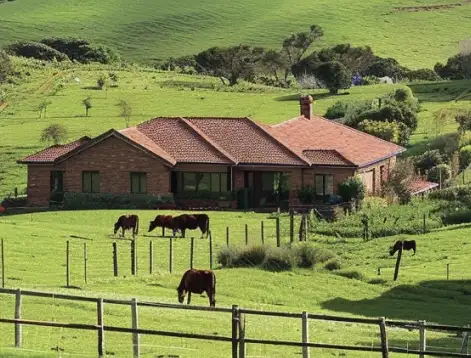
An acreage loan is a home loan used to buy a property on a larger block of land, often called a lifestyle property or hobby farm.
These properties typically:
- Are larger than a standard suburban block
- May include features like open land, sheds or space for small-scale farming
- Are mainly used for residential living, not full-scale commercial farming
The key difference is that, even though the land is larger and may have some rural features, it still needs to be primarily a place to live, not a business.
How Do Banks Assess Acreage And Lifestyle Blocks?
When assessing acreage and lifestyle blocks, banks mainly look at how easily the property would sell if they ever needed to recover their losses.
That means marketability is a big factor. The property’s location, land size and intended use can all affect whether a lender is willing to approve the loan.
Some lenders have strict limits on acreage, especially for land exceeding 10 hectares. Others may be less willing to lend if the property will be used for farming or other commercial activity.
In the end, the easier the property is to value and resell, the stronger your chances of approval.
Explore Acreage Loan Options
Find out how to finance your dream rural property with flexible acreage loan options.
Apply nowResidential Acreage Loans Have Lower Interest Rates
You can get a lower interest rate on an acreage property if it qualifies for a residential loan rather than a commercial loan.
That usually comes down to how the property will be used. If it’s mainly for residential living, lenders are more likely to treat it as a residential purchase. Some will still allow limited income-producing activity, but if the property generates enough income to operate as a viable farming business, it may be classified as commercial instead.
That distinction also affects how the property is valued. In many cases, bank valuers will assess the home and land only, without adding value for income-producing features such as orchards, livestock, sheds or machinery. This means the valuation may come in lower than the seller’s asking price, especially if the property has previously been used for farming income.
If you have a 20% deposit and can show you’re not relying on farm income, you may still be able to qualify for a residential loan and secure a lower rate.
Lifestyle Block vs Commercial Farm
The difference usually comes down to how the property is used.
A lifestyle block is mainly a place to live, even if it has a few animals, a small orchard or some hobby farming. A commercial farm is mainly set up to generate ongoing income from agricultural activity.
| Lifestyle block | Commercial farm |
|---|---|
| Mainly used as a home | Mainly used to run a farming business |
| Farming is small-scale or for personal use | Income from the land is a key purpose of the property |
| May have a few animals, a veggie patch or a small orchard | May have large crop areas, livestock operations or commercial orchards |
| A borrower usually does not rely on farm income for the loan | The borrower may rely on farm income to support the loan |
How Banks And Valuers Usually Tell The Difference
Banks and valuers will usually look at whether:
- The property is likely to generate no more than $20,000 in gross agricultural income a year.
- You do not intend to develop it for significant agricultural use.
- The business value tied to the property is less than $500,000.
- The business has not made a taxable profit in 3 of the last 5 years, including the current year.
- You are not relying on farm income to show you can afford the loan.
Based on what the valuer identifies, the property will generally be treated as either residential acreage or commercial farming land.
What Do Banks Look For In A Residential Acreage?
When assessing a residential acreage loan, banks look at whether the property fits standard residential lending policy.
Land size
Land size is one of the biggest factors. Many lenders prefer properties up to 10–15 hectares, although some may accept up to 50 hectares or more in the right circumstances. Larger properties, especially those over 200 hectares, are usually assessed more conservatively.
Location
Banks also consider the property’s location and market appeal. Acreage in remote or low-demand areas can be harder to finance because it may be more difficult to sell.
Access
The property should have practical, reliable access. Sealed roads are not always necessary, but lenders generally want all-weather access that is usable year-round.
Services
Access to services such as electricity, water and sewerage can also affect the assessment. Properties with tank water, septic systems or solar power may still be acceptable, depending on how marketable the property is overall.
Zoning
Zoning helps lenders work out whether the property is residential or commercial in nature. Land zoned for primary production is more likely to be treated as commercial, while rural residential zoning is generally more suitable for residential lending. As a guide, if the property is subject to GST, lenders may be more likely to see it as commercial.
What Should You Check Before Buying an Acreage Property?
What you should look for in an acreage will depend on whether you intend to grow food on the land or use the property for recreational use, such as horse-riding.
However, you may want to consider the following:
- Get a soil test to ensure the land is fertile enough to support crops.
- Sufficient space and fields for grazing a handful of cattle and horses.
- Close and easy access to ponds and lakes with uncontaminated water.
- A working dam or, alternatively, a bore water system.
- Zoning that allows for any renovations or improvements you’re intending to make. For commercial improvements, you may be restricted by rural residential zoning.
- Apart from soil contamination, consider the land’s proximity to oil, gas and other mining operations. These can have major environmental effects.
- The natural environment can pose a hazard, so check whether the property is bushfire-prone or in a flood zone.
- Ensure that all structures, including the house, stables, fences, gates, wells and everything else, are in working order before committing to the purchase.
- Ensure that you’re across any licences you need to own and raise certain livestock, and whether the property itself meets these legislative requirements.
- Set yourself a budget and definitely avoid buying at auction without a pre-approval first.
Do You Want An Acreage Loan?
Getting an acreage loan approved is not always straightforward, but that’s where our specialist mortgage brokers come in.
We know which lenders are more flexible on land size, location and property use, and we can help you structure your application to give you the best chance of approval.
Call us on 1300 889 743 or complete our free online assessment form to find out if you qualify.
Frequently Asked Questions
What If I want To Get A Farm Loan Instead Of An Acreage Loan?
If you’re buying a property to run as a farm, a farm loan may be the more suitable option.
Farm loans are generally designed for borrowers who need finance for a working rural property and may involve a larger deposit, more supporting documents and a more detailed application.
To learn more about how farm loans work and what lenders usually require, visit our farm loans page.
Can An Acreage Property Be Used For Land Banking?
Still need answers? We're here to help!
Ask an expertOur team of mortgage experts will assist you within 24 hours.