The Death of the “Community” Dream – What Buyers Actually Care About Today

01 Jun, 2026
Updated: 02 Jun, 2026
One readthrough of a modern real estate blog would have you believe that every homebuyer is looking for a community-focused utopia complete with shared veggie patches, co-working spaces, and neighborhood bond-building nights.
But if you talk to anyone who’s trying to buy a home right now, and you will get a completely different story. The romanticised idea of the “community-focused development” is hitting a wall of harsh economic reality.
The market has shifted from a quest for lifestyle fulfillment to a high-stakes game of musical chairs. Here is what is actually driving property decisions today.
Square Meters vs. Quality of Life? Try "Just Letting Me In"
Experts have predicted a shift in mindset for years, Buyers would gladly trade sprawling square footage for a higher “quality of life.”
The reality is that buyers aren’t debating the philosophical merits of a smaller footprint versus a bigger backyard. In fact, they are debating whether they will be approved for a loan at all. They are debating whether they will be approved for a loan at all.
In a hyper-competitive market, the ultimate metric of success isn’t finding a home that sparks joy but it’s more about getting an offer accepted before being pricedout forever.
The New Definition of Real Estate Success
We used to measure property success by the classic milestones: upgrading from an apartment to a townhouse, or finally securing that detached suburban home with a pool.
Today, the goalposts haven’t just moved; they’ve been entirely redesigned.
Just getting a foot on the property ladder is the new victory lap. Look at global hubs like Singapore, where a freestanding house can easily command $20 million and townhouses push past $10 million.
If that is the trajectory, owning any brick and mortar is a massive win.
The Reality Check is that a freestanding house is rapidly morphing from a standard middle-class milestone into a generational luxury asset.
Safety and Schools Trump "Connection"
There is a growing narrative that buyers are desperately seeking connection and built-in communities. But look closer at human behavior, and you see the opposite: the world is becoming fundamentally more introverted.
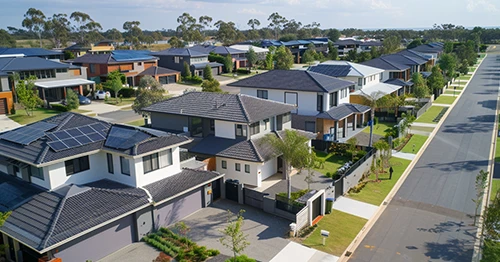
When people look at a neighborhood, they aren’t looking for a built-in social life. They want two things:
- Safety: Can I walk at night?
- Proximity: How close are the good schools?
Aside from those two factors, the desire for communal connection in property decisions is practically zero. People want a sanctuary to retreat from the world, not a mandatory neighborhood committee.
The Suburbs That Will Actually Thrive
Demographic shifts are what’s driving the next decade of real estate growth. The thriving suburbs of the next decade will be the ones that are favored by migrant-population.
Driven by practical needs and cultural infrastructure, family networks, and employment access, these buyer segments are the real engines of demand.
Final Words
The real estate conversation needs a reality check. While industry insiders push idealised visions of hyper-connected communities, the market is responding to much more primal drivers: scarcity, safety, and survival.
Enquire online for free today, or contact our team directly at 1300 889 743 to cut through the noise and map out your next step.